Dishes to avoid as a pregnant woman
During pregnancy, certain dietary precautions are recommended to protect the health of the expectant mother and the baby. Some raw, undercooked, or microbiologically fragile foods are therefore not advised during this period. Fortunately, many products can still be enjoyed in moderation and under appropriate safety conditions.

So, what should a pregnant woman avoid?
Do not eat raw fish or seafood during pregnancy
Most fish and seafood can be enjoyed without risk during pregnancy, provided they are well cooked. Avoid all raw shellfish such as oysters, raw mussels, and raw fish (fish tartare, sushi...) which can pose microbiological or parasitic risks if not sufficiently cooked. Some food parasites can pose a health risk to the expectant mother and baby.
Be careful with raw or undercooked eggs during pregnancy
Soft-boiled, undercooked, or raw eggs can contain bacteria such as salmonella: therefore, it is not recommended to eat them during your pregnancy. The yolk and white must be well cooked: thus avoiding soft-boiled eggs, raw eggs in carbonara pasta or homemade mayonnaise.
Indeed, all commercial sauces or salad dressings, like mayonnaise, are made from pasteurized eggs and are therefore considered safe. All other non-pasteurized products should be avoided. Homemade preparations made with raw eggs should be consumed with caution during pregnancy.
Certain cheeses are not recommended if you are pregnant
As a precaution, some health authorities recommend avoiding certain cheeses during pregnancy because they may promote the growth of bacteria such as Listeria, which can harm the baby's health. Pregnant women are advised not to consume raw milk cheeses, soft cheeses with a bloomy rind like brie, camembert, Mont d'Or, certain goat cheeses, and blue-veined cheeses like Bleu d'Auvergne or Roquefort.
Even if some of these cheeses may be pasteurized, they are more moist and less acidic than other cheeses, which can make them an ideal environment for bacterial growth.
Fresh, half-cooked foie gras, pâtés, slices, and raw or undercooked meats should be avoided by pregnant women.
However, fresh or half-cooked foie gras, pâtés, terrines, rillettes, or meat-based mousses are especially discouraged if they are undercooked. Similarly, all raw meats (beef, chicken, lamb, pork...) can contain bacteria or parasites, notably the parasite responsible for toxoplasmosis, which is generally eliminated by sufficient cooking. Always opt for well-cooked meats throughout pregnancy... and forget steak tartare for a few months.
Foie gras in cans during pregnancy: what precautions?
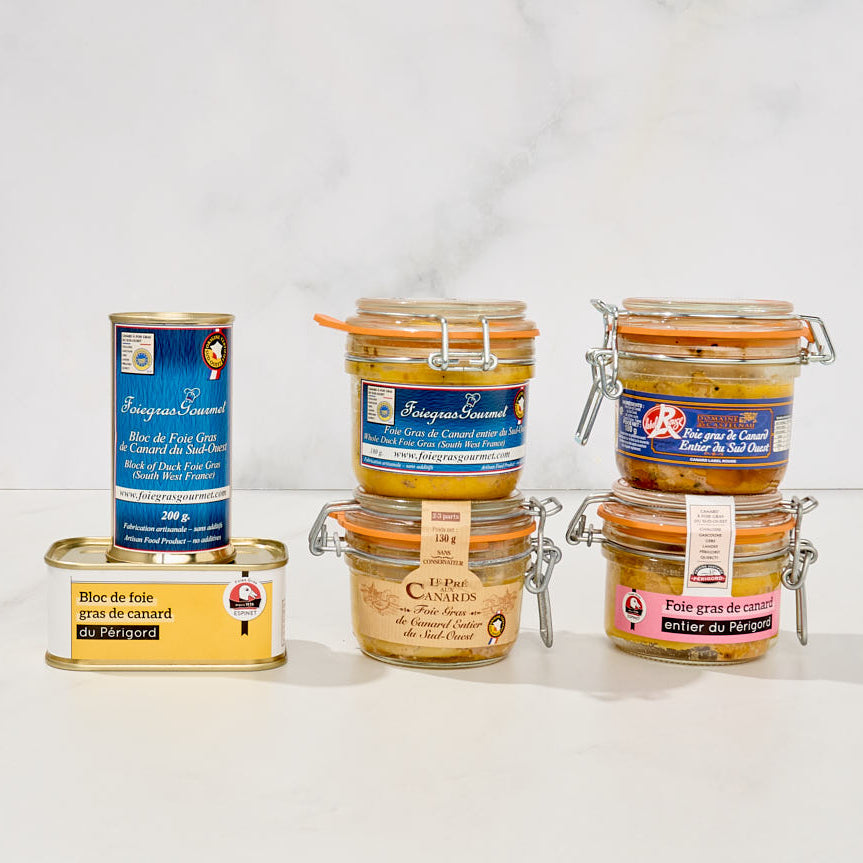
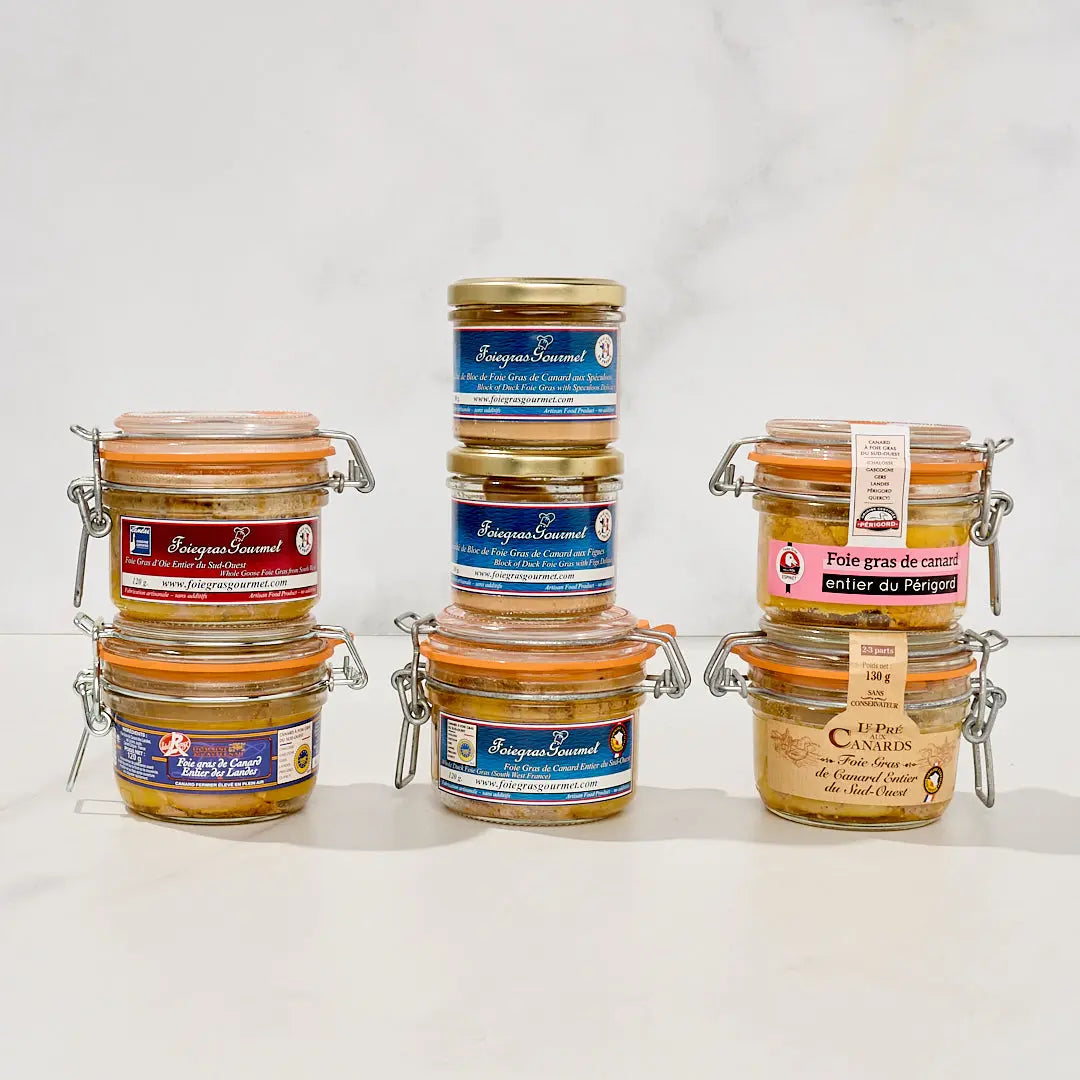
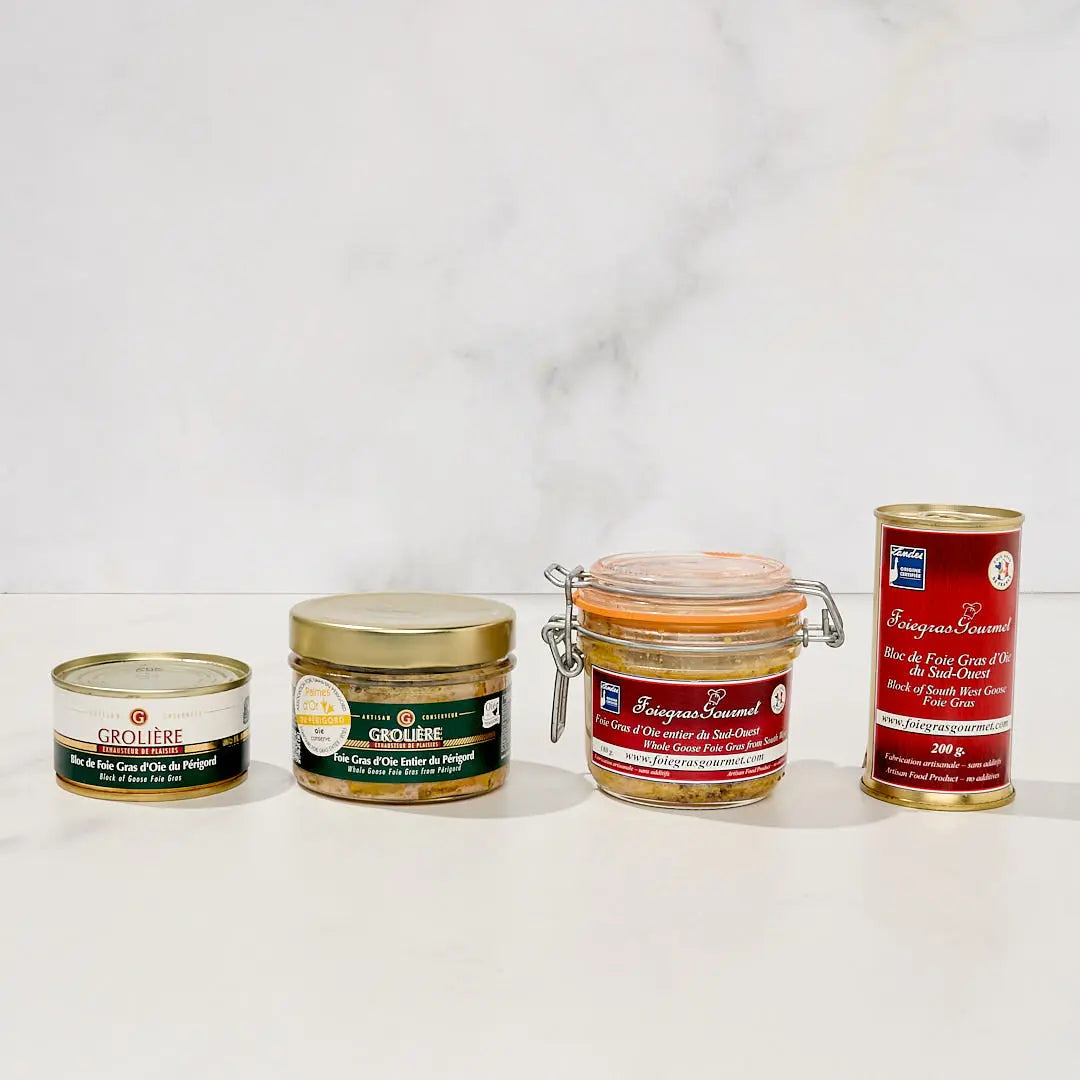
Thanks to its sterilization process, goose foie gras or duck foie gras in cans presents a much lower microbiological risk than fresh or half-cooked foie gras. It can therefore be consumed occasionally during pregnancy, provided quantities remain reasonable.
High-temperature sterilization allows elimination of the main bacteria and parasites that may be present in raw or undercooked products. Canned foie gras is thus very different from fresh or half-cooked foie gras, which remain discouraged during pregnancy due to risks related to listeriosis and toxoplasmosis.
However, it should be noted that foie gras, like other liver-based products, naturally contains a lot of vitamin A (retinol). Excessive vitamin A intake during pregnancy is discouraged by several health authorities. For this reason, canned foie gras can be enjoyed occasionally and in moderation.

In conclusion
During pregnancy, it is recommended to favor well-cooked and properly stored products. Foie gras in cans, thanks to its sterilization, can be consumed occasionally and in moderation, also taking into account its natural richness in vitamin A.
The key is to maintain a varied, balanced diet adapted to the recommendations of your healthcare professional.
📦 Place your order with Foie Gras Gourmet today and discover the authentic taste of canned foie gras, respecting the dietary precautions recommended during pregnancy.



Volgens het Voedingscentrum in Nederland is het eten van foie gras niet veilig voor ongeboren kinderen door het hoge vitamine A gehalte. Uw advies is gevaarlijk en misleidend, en u zou dit moeten aanpassen. Zie hier het advies:
Foie gras
Niet veilig
Eet geen lever, zoals gebakken kippenlevertjes of ganzenlever. En beperk de hoeveelheid leverproducten, zoals smeerleverworst en paté.
Lever en leverproducten bevatten veel vitamine
A. Te veel vitamine A verhoogt bijvoorbeeld het
risico op afwijkingen aan de schedel, zenuwen en hart- en vaatstelsel bij je baby. Een flinke hoeveelheid paté (bijvoorbeeld als voorafje in een restaurant) in één keer kan al schadelijk züjn voor je baby. Maar af en toe een boterham met een dun laagje smeerleverworst of paté kan geen kwaad voor jou of je baby.
Leave a comment