

In ovo sexing of ducks: how foie gras protects ducklings
At Foie Gras Gourmet, we made an editorial choice from day one: never to shy away from difficult subjects. Not because we enjoy controversy, but because today’s consumers—you—deserve honest, precise, and complete information about what you put on your plate.
Foie gras is a magnificent product, rooted in centuries of culinary culture in southwestern France. But some practices long associated with it deserve to be examined without sugarcoating. Among them: the fate of female ducklings in the foie gras industry.
This article focuses on in ovo sexing of ducks. We’ll explain not only what the problem was, but above all what has changed, how, and why the producers we select have chosen to commit to this approach.
Female ducklings: a century-old problem no one dared to name
Why the foie gras industry raises only males

To produce duck foie gras, the industry uses the mulard duck: an exceptional hybrid resulting from a cross between a male Muscovy duck and a female Pekin duck. Hardy, with a generous liver and flavorful meat, it is ideal for producing artisanal foie gras from Périgord or the Landes.
But here’s the biological reality: only male mulard ducklings have the characteristics needed to produce foie gras. Female mulards develop a smaller liver that is less suitable—they simply have no commercial outlet in this particular industry.
The result of this imbalance was brutal, and long concealed: for decades, female ducklings were culled on leaving the hatchery, just a few hours after hatching. Most often, they were mechanically ground up—a legal, industrial, and deeply shocking practice.
📌 Understanding the scale of the issueEvery year in France, millions of ducklings hatch in the hatcheries supplying the foie gras industry. Until very recently, about half of them—the females—were systematically culled. Worldwide, hundreds of millions of animals are affected across global poultry industries (chickens, ducks, turkeys). Animal protection organizations have rightly brought this reality to the public’s attention. |
A criticism we hear—and share
Let’s be clear: this practice has always raised ethical concerns for us. It’s one of the reasons why, from the very start of Foie Gras Gourmet, we decided to work only with artisanal producers in the Southwest, whose practices are transparent and verifiable—and never with industrial operators.
But being honest about the problem isn’t enough. What matters is taking action. And it turns out that researchers, cooperatives, and duck and goose farmers in the Southwest have found an innovative solution to avoid this highly shocking practice.
In ovo sexing: detecting a duckling’s sex before it is even hatches

About twenty years ago, researchers from the Orvia group, a specialist in duck genetic selection, observed something strange in their hatcheries: some ducklings had red eyes. A natural mutation, rare, but stable and hereditary.
On further investigation, they made a crucial discovery: in the mulard duck, this eye color trait is carried by a gene linked to the Z sex chromosome.
In other words, females have red (or light-colored) eyes, and males have black eyes. A natural, reliable visual marker.
But the genius of innovation didn’t stop there. Since the eye is one of the first organs to form in a bird embryo, it can be seen—provided you look with the right instruments—through the eggshell, as early as the 8th day of incubation, and can be reliably read between the 9th and 10th day.
The question was: can this reading be automated? Can we see through the shell, without damaging it, early enough to never allow an egg containing a female embryo to hatch?
The answer is yes. That it’s in ovo sexing.
In ovo sexing machines: optics, artificial intelligence, and ten years of patience
Several hatcheries have developed their own system. Orvia developed the SOC (Sexing in Duck Eggs) process, the result of more than a decade of research. In the heart of Gers, Sud-Ouest Accouvage hatchery in Aignan now analyzes more than 80,000 eggs per day.
🔬 How the in ovo sexing robot works, in 4 steps✔ Between the 9th and 10th day, the embryo’s eye is developed enough to be visible through the shell. ✔ A precision-optics camera captures an image of the inside of the egg without piercing, opening, or damaging it. ✔ An artificial intelligence algorithm instantly analyzes the color of the embryo’s eye and determines its sex. ✔ Female eggs are removed at this early stage, before any development of sensitivity to pain. Male eggs continue incubating normally until hatching. Result: the vast majority of female eggs are removed before hatching. |
Why this is ethically acceptable - and scientifically sound
A legitimate question arises: is it really more ethical to end an embryo’s development in the egg rather than after hatching?
The answer, scientifically speaking, is yes - and here’s why. Between the 9th and 10th day of incubation, the embryo is at a very early stage of development, well before hatching, when, according to current scientific knowledge, its ability to feel pain is considered very unlikely. Removal at this early stage is therefore radically different - in terms of animal sentience - from eliminating a duckling after hatching.
It is also on the basis of this scientific reasoning that France built its regulations banning the culling of male chicks in the egg-laying industry, encouraging in ovo sexing as a valid alternative.
Foie Gras Gourmet’s commitment
100% of our duck producers use in ovo sexing
We require this technology from all our producer partners. It’s not an option, and it’s not a marketing bonus - a non-negotiable criterion for being sold on Foie Gras Gourmet.
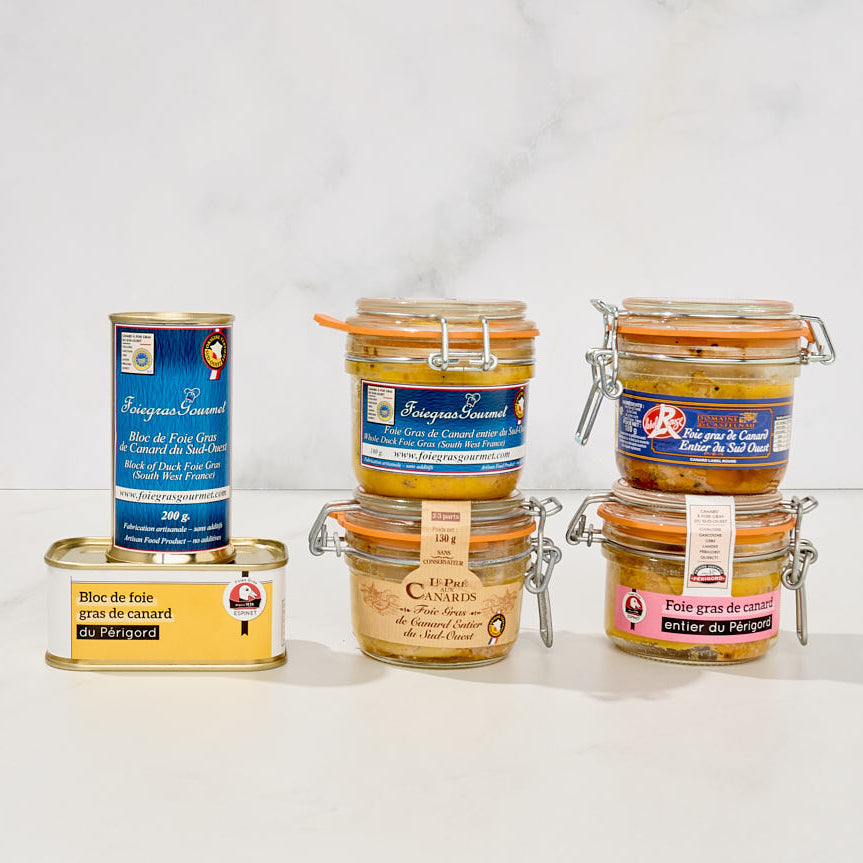
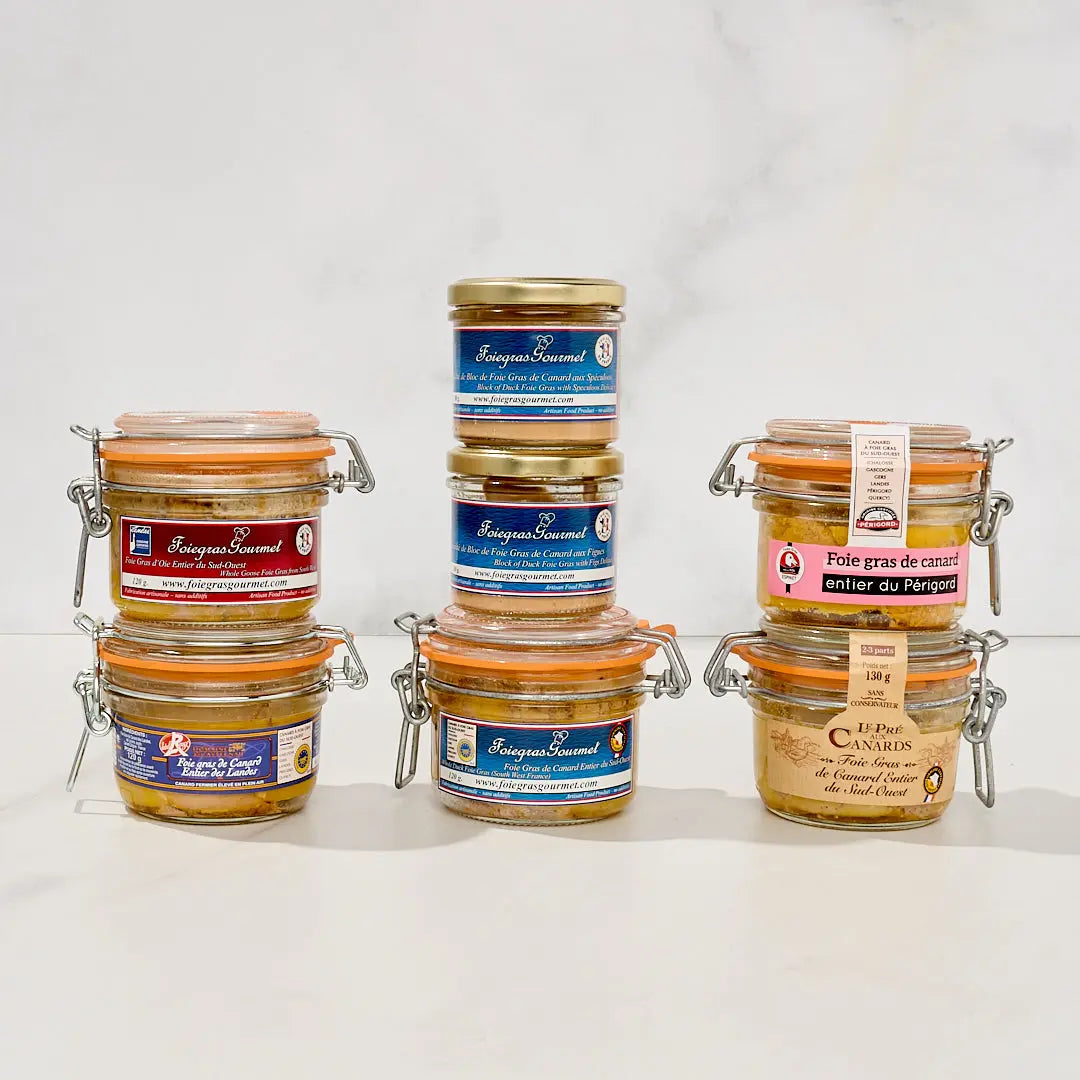
Today, when you buy mi-cuit (semi-cooked) duck foie gras, fresh foie gras, a block of foie gras or canned whole foie gras in a tin from our store, you can be certain that the duck that produced it was born in a hatchery that practices in ovo sexing. For this foie gras to reach your plate, the female ducklings were removed before they even hatched.
We’re proud of this. And we want to share it with you.
🤝 Our concrete commitments to ethical foie gras✔ Mandatory in ovo sexing at all our partner producers, without exception. ✔ Free-range rearing with access to meadows throughout the growing phase. ✔ Traditional hand-feeding, with non-GMO corn grown locally in the Southwest. ✔ Small-scale artisan farms with limited flock sizes. ✔ Full traceability: we know each of our producers, their farms and their practices. You can ask us anything. |
What about chickens? The foie gras industry is more virtuous than you might think
We are sometimes asked: chickens are different, aren't they? The answer calls for some nuance, as it helps clarify the situation.
In the broiler chicken industry, both males and females are raised and valued for their meat — so there is no problem of eliminating one sex at the hatchery. By contrast, in the laying hen industry (for producing eggs for consumption), male chicks — unsuitable for egg production and not profitable for meat — were also culled by the millions every year.
Faced with the scale of the ethical scandal and pressure from public opinion, France and Germany were the first countries in the world to legally ban this practice in the egg-laying industry. In France, a decree made in ovo sexing mandatory in hatcheries serving this sector. Other European countries, such as Italy, Austria and Luxembourg, have also adopted bans, and a ban across the European Union is being considered.
The foie gras duck industry, meanwhile, is not yet covered by this decree. But the industry is making progress: A interprofessional agreement reached in 2024 supports the rollout of in ovo sexing throughout the duck industry. And several hatcheries — including those working with our producers — have taken the lead.
💡 Did you know?France, along with Germany, is one of the first countries in the world to have legally banned the culling of male chicks in the egg-laying industry. Artisanal foie gras producers who already practice in ovo sexing voluntarily are therefore at the forefront of a wider ethical revolution. By choosing Foie Gras Gourmet, you support pioneering farmers. |
What this means for you in practical terms

We’re not asking you to change your habits or take an activist stance. We’re simply asking one thing of you: consume mindfully.
Foie gras is one of the great jewels of French gastronomy: it is part of France’s protected cultural and gastronomic heritage, and features prominently in the gastronomic meal of the French, inscribed on UNESCO’s Intangible Cultural Heritage of Humanity list. It sustains thousands of families in rural areas of Périgord, Gascogne, Gers, and Landes. And in its artisanal form—free-range rearing, traditional gavage, in ovo sexing—it is now one of the finest examples of responsible animal production.
Choosing artisanal foie gras from a committed producer means refusing to fund industrial production that raises concerns. It means supporting those who do things right, even when no one requires them to.. It means voting with your wallet for an agricultural model you can stand behind.
And, let’s admit it, it’s also about treating yourself to an exceptional gastronomic pleasure—a Gascony mi-cuit foie gras melting over a slice of toasted country bread, accompanied by a glass of Sauternes or sweet Jurançon, it’s an experience that words struggle to do justice to.
In conclusion: artisanal foie gras at the forefront of animal welfare
In ovo sexing of mulard ducks is more than a technical advance. It symbolizes an industry that, in its artisanal segment, takes society’s expectations seriously—and takes concrete action without waiting for the law to force it to.
The producers we’ve selected at Foie Gras Gourmet are among these pioneers. They deserve your support. And their foie gras deserves a place at your table.
So no, artisanal foie gras is not the symbol of cruelty that some people make it out to be. When produced well, it shows that gastronomic excellence and respect for animals can go hand in hand—step by step, innovation after innovation, with the patience and passion of the people of the southwest.



Leave a comment